software solution · 2/5/2026 · Alfred
I Built a Website. What Do I Do Next?
You launched a website. Here are the next operational, marketing, and measurement steps that actually matter.
- Why does this issue show up in real operations?
- What should a business measure right after launch?
This is one of the most common and most honest questions business owners ask after launching a new site.
You finally did it.
You picked a domain.
You worked with a designer or builder.
You wrote the copy, chose the colors, and hit publish.
The website looks good. Friends tell you it looks professional. You feel a sense of relief, maybe even pride.
And then something uncomfortable happens.
Nothing.
No calls.
No emails.
No appointments.
This moment is where most businesses get stuck, because there is an assumption that quietly lives in the background. The assumption is that a website automatically creates business.
It doesn’t.
A website is not a growth engine. It is a foundation. What you do next determines whether it becomes useful or just another digital brochure.
The first thing to understand is what a website is actually for.
A website’s job is not to convince everyone. It is to support decisions already in progress. Most visitors arrive with a question, a problem, or mild interest. Very few arrive ready to act.
If nothing bridges the gap between curiosity and action, they leave.
That is why many businesses focus on the wrong next step. They tweak design, rewrite headlines, or obsess over traffic numbers. Those things can matter later, but they rarely fix the real issue.
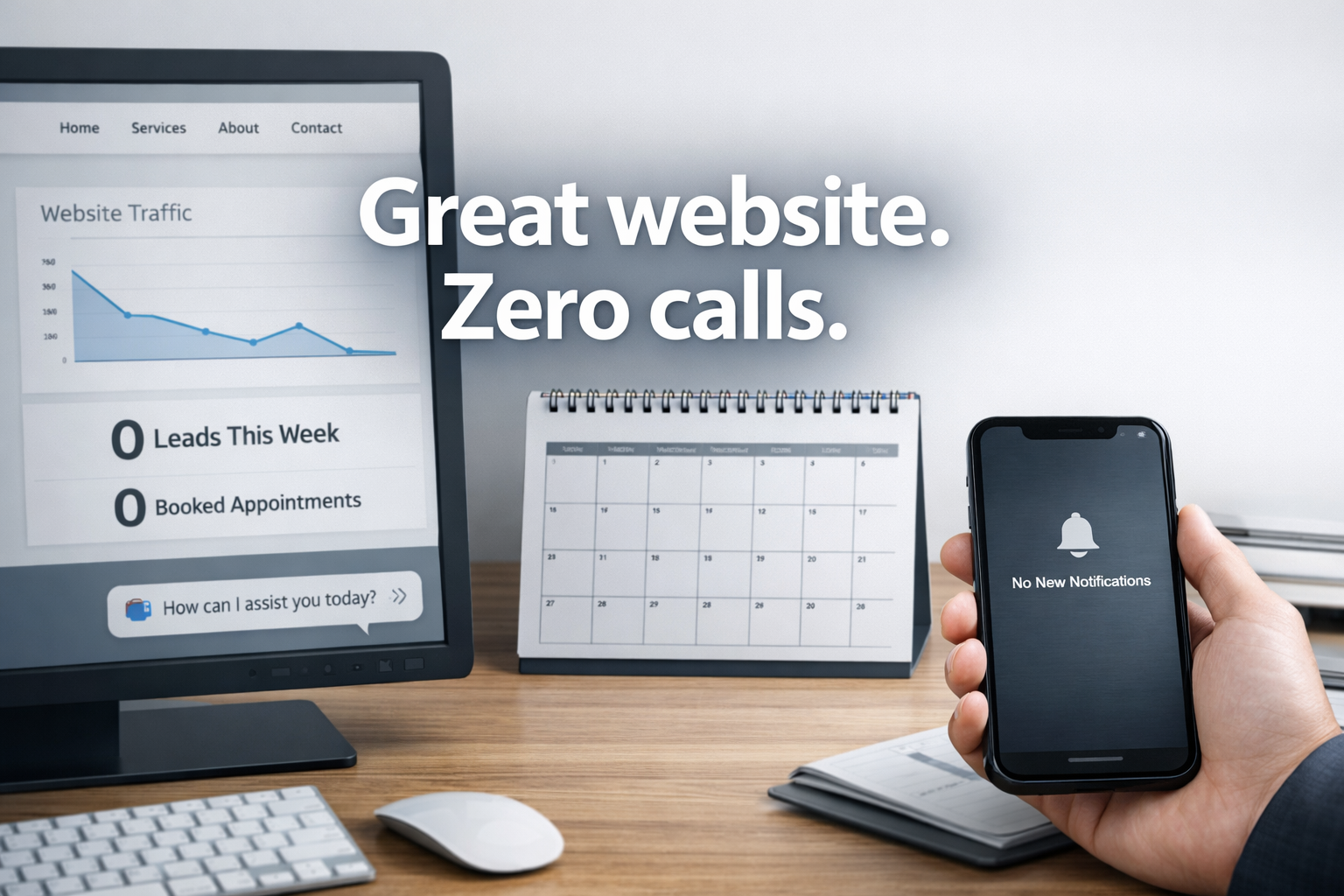
The real issue is what happens after the website goes live.
The next step is not more pages.
It is not more features.
It is not even more traffic.
The next step is creating a response system.
Every visitor who lands on your website is making a quiet decision. Should I act now, later, or not at all? Most websites give them no reason to act now. They show information and then stop.
This is where businesses lose momentum.
People do not want to work to contact you. They want clarity, speed, and confidence. If those are missing, they leave even if they liked what they saw.
That brings us to the second thing most people overlook. Timing matters more than persuasion.
Someone ready to ask a question right now is far more valuable than ten people who might come back later. Traditional websites are slow. Forms get filled out and disappear into inboxes. Replies come hours or days later, if at all.
From the visitor’s perspective, that feels like friction.
Modern websites need a way to respond in the moment. That does not mean aggressive popups or pushy sales language. It means acknowledging intent when it exists.
This is where AI has quietly changed the game, not as a replacement for people, but as a bridge.
AI works best before the sales process begins. It answers basic questions instantly. It clarifies services. It helps visitors understand whether they are a fit. Most importantly, it reduces hesitation.
Instead of waiting, visitors get answers. Instead of guessing, they get direction. When they finally call or book, the conversation starts at a higher level.
This leads to the third important shift after launching a website. Not every visitor should contact you.
Many businesses think more messages mean better results. In reality, unqualified leads drain time and energy. A smart system helps filter before the phone rings.
AI can handle common questions, pricing ranges, availability, and next steps. That way, when someone reaches out directly, they are already informed. Calls become shorter, clearer, and more productive.
This changes how the website feels to visitors. It stops being passive and starts being helpful.
The fourth thing to focus on is consistency.
People browse at odd hours. Late nights. Early mornings. Weekends. A static website does not care, but a business does. Missed messages add up quickly.
A system that responds consistently builds trust without effort. Visitors feel acknowledged even when no one is actively watching the site. That consistency is often the difference between someone leaving and someone booking.
At this point, it becomes clear why many websites fail despite good design. They explain, but they do not engage. They inform, but they do not guide.
So if you built a website and are wondering what to do next, the answer is simple but not easy.
Stop thinking of the website as the end of the project. It is the beginning.
The next step is turning it into a system that responds, qualifies, and supports action.
That does not mean replacing human interaction. It means protecting it. When people finally reach you, the conversation should matter.
A great website tells people who you are.
A smart system helps them decide what to do next.
When that gap is closed, calls feel natural instead of forced. Appointments feel expected instead of random. Growth becomes predictable instead of frustrating.
That is what comes after launching a website.
No more polish.
No more traffic.
But a better connection at the right moment.
Why does this issue show up in real operations?
It usually appears when the business process, tool choice, and day-to-day execution stop lining up cleanly. Once that happens, teams compensate manually and the friction compounds.
What should a business measure right after launch?
After launch, the first priority is not aesthetic tweaking. It is understanding whether the site helps visitors take the next step. That means watching inquiry flow, lead quality, page intent alignment, and whether the site explains the offer clearly enough for the right buyer.
A website rarely fails because it exists. It fails because nothing around it supports response, qualification, and follow-through. The launch is only the start of the system.
Google's SEO Starter Guide is still useful because it reinforces that discoverability and clarity both matter after launch. If a business wants a faster read on what is working and what is leaking, a structured marketing audit is often a better next move than redesigning the homepage again.
Let's Talk
Talk through the next move with Pro Logica.
We help teams turn complex delivery, automation, and platform work into a clear execution plan.

Alfred leads Pro Logica AI’s production systems practice, advising teams on automation, reliability, and AI operations. He specializes in turning experimental models into monitored, resilient systems that ship on schedule and stay reliable at scale.