AI Local SEO Services
AI Local SEO That Makes Your Phone Ring
The phone isn't ringing like it used to. You search for your own service and a competitor sits above you on Google Maps. You tried ads, and the calls stopped the day the budget did. That usually isn't a problem with your work. It means Google no longer sees you as the obvious local answer.
Pro Logica runs AI local SEO for service businesses across the United States: a Google Business Profile that stays active, real service and city pages, a steady flow of reviews, and weekly tracking of Map Pack rank and calls. The goal is simple: more calls from people who are already searching for what you do.
If you've said any of these, this page is for you
- “The phone used to ring on its own. Now we have dead days and I can't tell why.”
- “When I search for my own service, a competitor shows up above me on Google Maps. Half of them I've never heard of.”
- “We ran ads and it worked while we paid. The week we paused the budget, the calls stopped.”
- “Nobody has touched our Google Business Profile since the day we set it up.”
- “We work in a dozen towns, but we only show up in the one where the office is.”
- “Customers love us, and we still have fewer reviews than the shop down the road.”
Google says local results are based mainly on three things: relevance, distance, and prominence. A profile that has gone quiet, a website that never mentions the towns you serve, and a thin review count all work against you, no matter how good the work is. The most common version we see: your business is tied to one address on Google, your site has a home page and a services page that name no towns, and a competitor with a page for every town they cover gets the calls from the places you drive to every week.
What it costs to sit outside the top 3
The Map Pack shows three businesses. Someone who needs help today picks from those three, and anyone who calls one of them is a call you never knew about. Every week you're not in the top 3, those calls go to whoever is.
We won't quote industry averages at you. Use your own numbers instead:
- How many calls from Google does a good week bring you?
- How many of those calls usually turn into booked jobs?
- What is an average job worth, and how often does that customer come back?
If losing your spot costs even a few booked jobs a week, multiply that by your average job value and by 52. That's the number to weigh against the cost of fixing it.
The gap also widens on its own. The competitor holding your spot gets the calls, finishes the jobs, and collects the reviews, which makes them more prominent next month. Paid ads don't close that gap; they rent you a position that disappears when the spending stops. A review, a useful page, or an accurate profile keeps working after the week it was added.
The fix: what our AI does for you every week
Local SEO fails when it's treated as a one-time setup. These four jobs run every week, and each one feeds the weekly report.
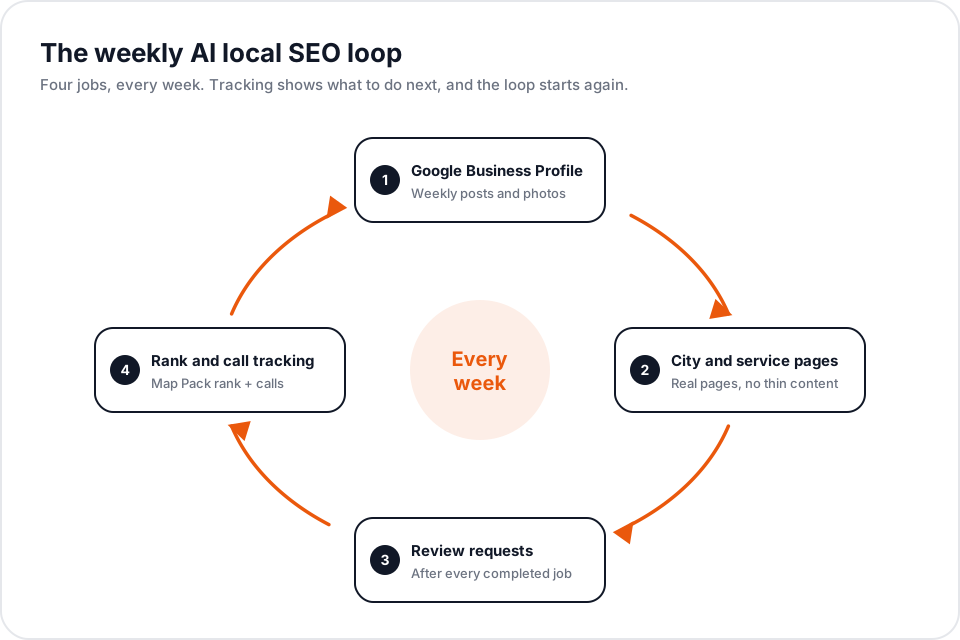
A Google Business Profile that stays active
Our AI drafts a post for your profile every week, built from the jobs you actually did, the services you want more of, and what customers in your area are searching for that month. Photos you send from the field go up with plain, descriptive captions instead of sitting in someone's camera roll.
We also keep the parts of the profile that quietly decay accurate: primary and secondary categories, the services list, hours, holiday hours, and the service areas you really cover. A profile with stale hours or a missing service is a reason for Google to show someone else.
Local service and city pages without thin content
Your website needs a real page for each core service and for each town you genuinely serve. Each page is written for that service or that place: the jobs you do there, how quickly you can get there, what customers in that area usually ask, and proof from that area when you have it. We never publish the same page with the city name swapped, because Google treats that as low-value and so do customers.
Every page has click-to-call at the top and a booking option, so someone who finds you at night can still get on your schedule. When you expand into a new town, we add a page for it; nothing gets rebuilt. If you want the reasoning behind this approach, our guide on how to create local service area pages without creating thin content walks through it.
Read: how to create local service area pages without creating thin content
Review requests that actually go out
Most happy customers never leave a review because nobody asked at the right moment. After each completed job, the system sends a short text or email with a direct link to your Google review form while the work is fresh. It asks every customer, not only the ones you expect to be happy, because filtering who gets asked is against Google's review policies, and so is offering anything in exchange for a review.
We draft a reply to every review, good or bad, so your profile shows a business that is paying attention.
Map Pack rank and call tracking
Ranking is checked from a grid of points across your service area for the searches that bring paying jobs, not one vanity keyword from your office address. Calls from your Google profile and from your website are tracked separately, so you can see whether the work is producing calls, not just impressions.
Underneath all four sits the technical groundwork: the same business name, address, and phone number on your site and your listings, LocalBusiness structured data, pages that load quickly on a phone, and a phone number a customer can tap. For more on when city pages help and when they hurt, see whether location pages still work for local SEO.
What changes when it's working
- More calls from Google Search and Google Maps, tracked so you know which ones came from local search.
- A clear target: the top 3 of the Map Pack for the searches that bring paying jobs, across the areas you actually serve.
- A profile that looks alive to a customer comparing options: recent photos, recent posts, and replies to reviews.
- Service and city pages that answer real questions, so people who land on your site have a reason to call.
What we won't do is promise a ranking. Nobody controls Google's results, and distance from the searcher is fixed. We concentrate on the searches and areas where you can realistically win, and we show you every week whether it's working.
Proof you can check: the weekly rank and calls report
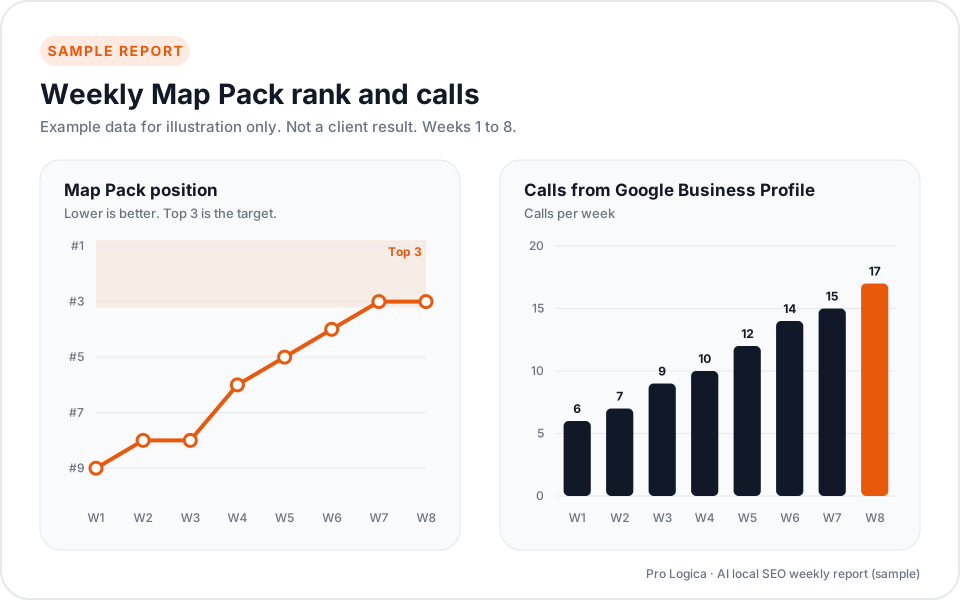
Before any work starts, we record where you stand: your Map Pack position for your core searches across your service area, your current call volume from Google, and your review count and rating. Every report after that compares against that baseline, so the progress is measured, not claimed. Each week you get:
- Map Pack position for each tracked search at each point in your service area, with the change since last week.
- Calls from your Google Business Profile and calls from your website, counted separately.
- New reviews, your current rating, and the replies that went out.
- Posts and photos published to your profile that week.
- Service and city pages added or updated, with links so you can read them.
- What we plan to work on next week and why.
Once the phone rings, make sure no lead slips
More calls only matter if they turn into booked jobs. When volume goes up, the leaks show up fast: calls missed after hours, quotes nobody follows up on, and leads that live in one person's text messages. That's where the rest of Pro Logica's work comes in.
- Custom CRM development puts every call, quote, and follow-up in one place built around how your business sells.
- Workflow automation services handle the follow-up texts, missed-call callbacks, and job handoffs your team does by hand.
- Running a plumbing company? See local SEO for plumbers for emergency and after-hours search, and CRM development for plumbing companies for what happens after the call.
AI local SEO questions
What is AI local SEO, and how is it different from regular local SEO?
The goals are the same: show up in Google Maps and local search for the services you sell, in the places you serve. The difference is the weekly workload. Local SEO slips when nobody has time to post, upload photos, request reviews, and check rankings. Our AI handles the repeat work every week, and we review the results so the profile, pages, and reviews keep moving instead of going quiet after the first month.
Can you guarantee I'll be in the top 3 on Google Maps?
No, and you should be wary of anyone who does. Google decides local rankings, mainly on relevance, distance, and prominence. We can't change how far a searcher is from your business. We can make your profile and website far more relevant and build the reviews and activity that make you more prominent. The top 3 of the Map Pack is the target we work toward and report on every week.
How long before I see more calls?
It depends on how competitive your market is and where you start. In a quieter market, profile and review improvements can show up in rank within weeks. In a crowded metro, it takes longer. We record your rank and call baseline before any work starts, so the weekly report shows the real direction instead of a guess.
Do I need a new website, or can you work with the one I have?
We can usually work with the site you have, as long as we can add pages and edit page titles and contact details. If the current site is very slow on phones, can't take new pages, or buries the phone number, we'll tell you plainly and explain what it would take to fix.
We go to customers and have no storefront. Can we still rank in the Map Pack?
Yes. Google lets service-area businesses hide their street address and list the areas they serve instead. Rankings still depend on where the business is based, so you're strongest close to home. City pages on your website help you show up in regular search results in the towns farther out.
Find out where you rank today
Call 949-205-7333 or book a call. We'll look at where you show up on Google Maps for your main searches, what your profile and website are missing, and what it would take to get your phone ringing again.